
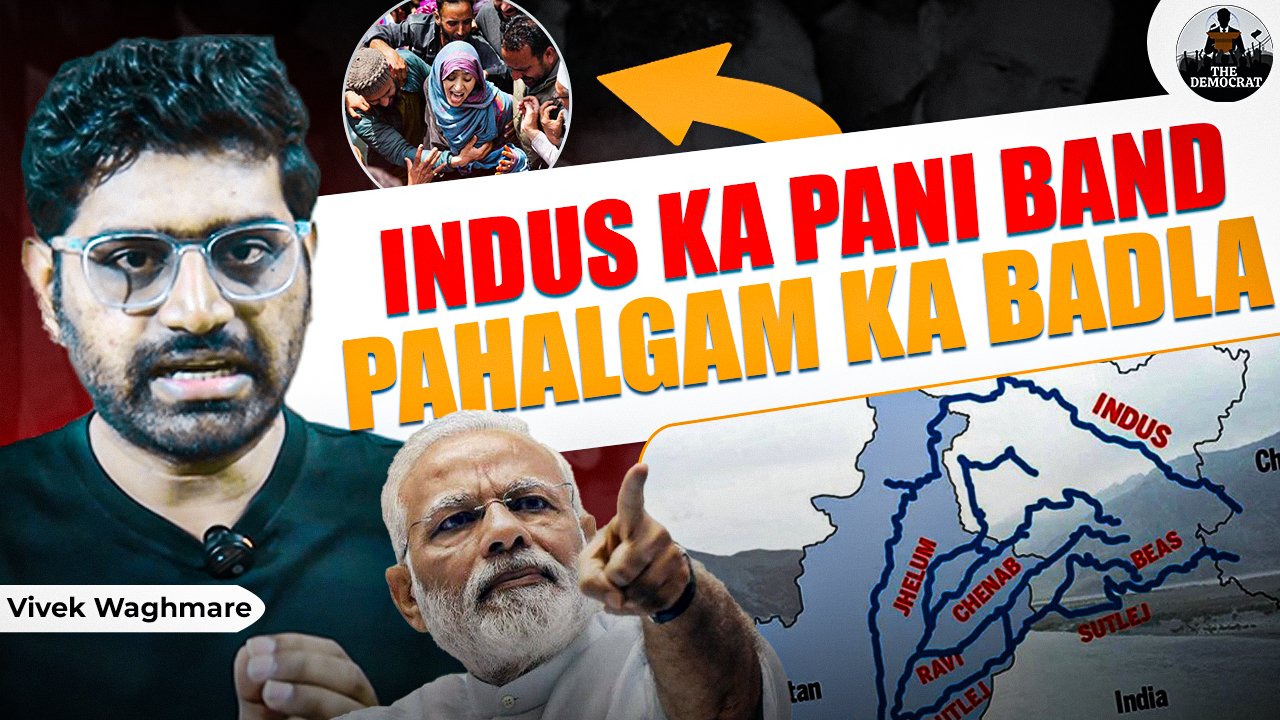
The Indus River, often called the lifeline of South Asia, has sustained millions of lives across India and Pakistan for centuries. Its waters irrigate fields, power homes, and shape economies. Since 1960, the Indus Water Treaty (IWT) has governed how these waters are shared between the two nations, surviving wars, conflicts, and tensions. But on April 23, 2025, India made a historic move: it suspended the IWT in response to a devastating terror attack in Pahalgam, Anantnag, that killed 26 people. This decision has sent shockwaves across borders, raising questions about water, peace, and the future of India-Pakistan relations.
The Indus: A River That Binds and Divides
Picture a farmer in Punjab, gazing at his parched fields, praying for the river’s flow. Or a family in Karachi, relying on tap water drawn from the Indus. The Indus River system—comprising the Indus, Ravi, Beas, Sutlej, Jhelum, and Chenab—is more than water; it’s life itself. These rivers originate in India’s Jammu & Kashmir, flow through its plains, and continue into Pakistan, nourishing both nations.
When India and Pakistan were carved out of British India in 1947, the partition didn’t just split land—it divided rivers. The Indus and its tributaries became a shared resource, but with borders drawn, how would the water be shared? In 1948, tensions flared when India briefly halted water from the Ravi and Sutlej, threatening Pakistan’s agriculture. The fear was real: without water, farms would fail, and millions would suffer.
Enter the World Bank, which mediated a solution. After nine years of talks, the IWT was signed on September 19, 1960, by India’s Prime Minister Jawaharlal Nehru and Pakistan’s President Ayub Khan. The treaty promised peaceful water-sharing, with the World Bank as guarantor. It was a beacon of cooperation in a region marred by conflict.
How the Treaty Works ?
The IWT is a detailed agreement with 12 Articles and 8 Annexures, dividing the Indus system’s waters:
- Eastern Rivers (Ravi, Beas, Sutlej): Allocated to India, providing 33 million acre-feet (MAF) to irrigate Punjab, Haryana, and Rajasthan.
- Western Rivers (Indus, Jhelum, Chenab): Allocated to Pakistan, delivering 135 MAF, critical for 80% of its farmland (16 million hectares) and cities like Lahore and Karachi.
India can use Western Rivers for limited purposes, such as drinking water or run-of-river hydropower projects (e.g., Kishanganga), but cannot build large storage dams or divert flows. The treaty mandates transparent data-sharing on water flows and establishes the Permanent Indus Commission (PIC) to resolve disputes. Remarkably, the IWT endured three wars (1965, 1971, 1999), the Kargil conflict, and numerous terror attacks, earning global praise as a model of resilience.
Tensions Beneath the Surface
Despite its success, the IWT hasn’t been without friction. Pakistan has repeatedly objected to India’s hydropower projects on Western Rivers, like Kishanganga and Ratle in Jammu & Kashmir, claiming they disrupt water flows. India maintains these projects are run-of-river, compliant with IWT rules, as they don’t store or divert water. Disputes escalated in 2015 when Pakistan sought World Bank arbitration, while India preferred a Neutral Expert process. By 2023, both the Court of Arbitration and Neutral Expert leaned toward India, but Pakistan’s objections persisted.
The treaty’s challenges aren’t just technical—they’re deeply political. After the 2016 Uri attack, Prime Minister Narendra Modi declared, “Blood and water can’t flow together,” hinting at leveraging the IWT against Pakistan’s alleged support for terrorism. India revived the stalled Tulbul Navigation Project on the Jhelum, signaling its intent. Similar sentiments followed the 2019 Pulwama attack, but the treaty held—until now.
The Pahalgam Attack: A Breaking Point
On April 22, 2025, tragedy struck Pahalgam, a serene tourist haven in Anantnag, Jammu & Kashmir. The Resistance Front (TRF), an offshoot of Pakistan-based Lashkar-e-Taiba, launched a brutal terror attack, killing 26 people—tourists, locals, and a foreign national. The attack shattered the region’s peace, dealing a blow to its tourism-driven economy and exposing vulnerabilities in its security.
On April 23, 2025, PM Modi convened an urgent 2.5-hour Cabinet Committee on Security (CCS) meeting with Home Minister Amit Shah, NSA Ajit Doval, and Foreign Minister S. Jaishankar. Intelligence confirmed “cross-border linkages” to Pakistan, prompting a decisive response. Foreign Secretary Vikram Misri announced, “The Indus Waters Treaty will remain in abeyance until Pakistan credibly and irrevocably abjures cross-border terrorism.” For the first time in 64 years, India suspended the IWT.
Additional measures included:
- Shutting the Attari-Wagah border, halting trade and people-to-people contact.
- Declaring Pakistani military advisors persona non grata, with a 7-day exit deadline.
- Barring Pakistani nationals from India under the SAARC Visa Exemption Scheme, with a 48-hour exit for those present.
- Recalling Indian diplomats from Islamabad and expelling Pakistani diplomats from Delhi.
These steps reflect India’s firm stance: terrorism and cooperation cannot coexist.
What Does Suspension Mean?
The IWT suspension is a strategic escalation with profound implications for both nations and the region. Let’s break it down:
For Pakistan:
- Agricultural Crisis: The Western Rivers irrigate 80% of Pakistan’s farmland, supporting crops like wheat, rice, and sugarcane. Reduced flows could trigger food shortages, inflate prices, and devastate farmers in Punjab and Sindh.
- Water Scarcity: Pakistan, already among the world’s most water-stressed nations, faces a looming humanitarian crisis as per capita water availability dwindles.
- Energy Shortages: Dams like Tarbela and Mangla, reliant on Indus and Jhelum, generate 25% of Pakistan’s electricity. Lower flows could cause power cuts, disrupt industries, and fuel public unrest.
- Political Fallout: Economic and water crises may spark protests, pressuring Pakistan’s military-backed government. Pakistan’s Power Minister labeled the suspension “water warfare,” hinting at domestic escalation.
For India:
- Strategic Advantage: Suspension frees India to accelerate hydropower projects (e.g., Pakal Dul, Ratle) in Jammu & Kashmir, boosting energy and economic growth.
- Public Support: The move aligns with PM Modi’s “zero tolerance for terror” policy, resonating with citizens, especially in J&K.
- Infrastructure Challenges: India lacks large storage dams on Western Rivers, limiting immediate water control. Building such infrastructure could take years.
- Diplomatic Risks: Unilateral suspension may draw international criticism, as it could breach global water-sharing norms. Pakistan may seek UN or International Court of Justice intervention, challenging India’s global image.
Global Implications:
- World Bank’s Role: As IWT guarantor, the World Bank faces a diplomatic conundrum, as the treaty requires mutual consent for termination.
- Geopolitical Dynamics: China, controlling the Indus source in Tibet, could exploit the situation. The US and EU, seeking South Asian stability, may urge de-escalation.
- International Law: Experts, like Pakistan’s former diplomat Abdul Basit, argue that blocking lower riparian flows violates international norms, potentially framing India’s move as akin to “war.”
The Road Ahead: Challenges and Choices
The IWT suspension is a bold signal, but its practical impact depends on India’s infrastructure and diplomatic strategy. India may selectively control Western River flows during dry seasons, as outlined by Jal Shakti Minister CR Paatil, to pressure Pakistan. However, large-scale water diversion requires significant dam construction, a long-term endeavor.
Pakistan’s response has been swift but limited. On April 24, 2025, it suspended the 1972 Simla Agreement, restricted airspace, halted trade, and threatened UN action. Yet, its heavy reliance on Indus waters and economic constraints limit its leverage. Pakistan’s Defense Minister Khawaja Asif called an emergency meeting, signaling internal alarm.
India must balance its hardline stance with diplomatic finesse, convincing allies like the US that the suspension targets terrorism, not water misuse. As former ambassador Kanwal Sibal argues, the move is a logical extension of the “blood and water can’t flow together” principle. For Pakistan, addressing terrorism credibly is the only path to restoring cooperation.
A Call to Reflect
The IWT suspension is more than a policy shift—it’s a moment that tests the resilience of India-Pakistan relations. It reminds us that water, often taken for granted, is a powerful force in geopolitics. At The Democrat, we invite you to ponder: How can India balance justice for Pahalgam’s victims with the humanitarian needs of millions? What steps should Pakistan take to rebuild trust?
Share your thoughts in the comments below. What should India do next in response to the Pahalgam attack?
Stay informed with The Democrat for more insights into the issues shaping our world. Follow us for updates, and let’s keep the conversation going!
References
- India Today. (2025, April 24). Pakistan on Indus Waters Treaty suspension by India after Pahalgam terror attack. https://www.indiatoday.in
- The Times of India. (2025, April 24). Pahalgam terror attack: What is Indus Water Treaty and how will its suspension impact Pakistan? https://timesofindia.indiatimes.com
- Hindustan Times. (2025, April 24). Pakistan reacts to India’s Indus Waters Treaty suspension over Pahalgam terror attack: ‘Water warfare’. https://www.hindustantimes.com
- Wikipedia. (2025, April 26). Indus Waters Treaty. https://en.wikipedia.org/wiki/Indus_Waters_Treaty
- India Today. (2025, April 26). India forms 3-step plan on Indus water to stop flow to Pakistan. https://www.indiatoday.in
- Indus Water treaty, 1960 – https://www.internationalwaterlaw.org/documents/regionaldocs/IndusWatersTreaty1960.pdf
